Mopar had A, B, C and E bodies.
A bodies were the Darts, Demons and Dusters.
B bodies were the Belvederes, 440's, Coronets, Chargers, Satellites and Road Runners,
C bodies were the Furys, Polaras, Royal Monoco, Chrysler 300, (the C Bodies were not considered "Muscle Cars".)
E bodies were the Challengers and Cudas.
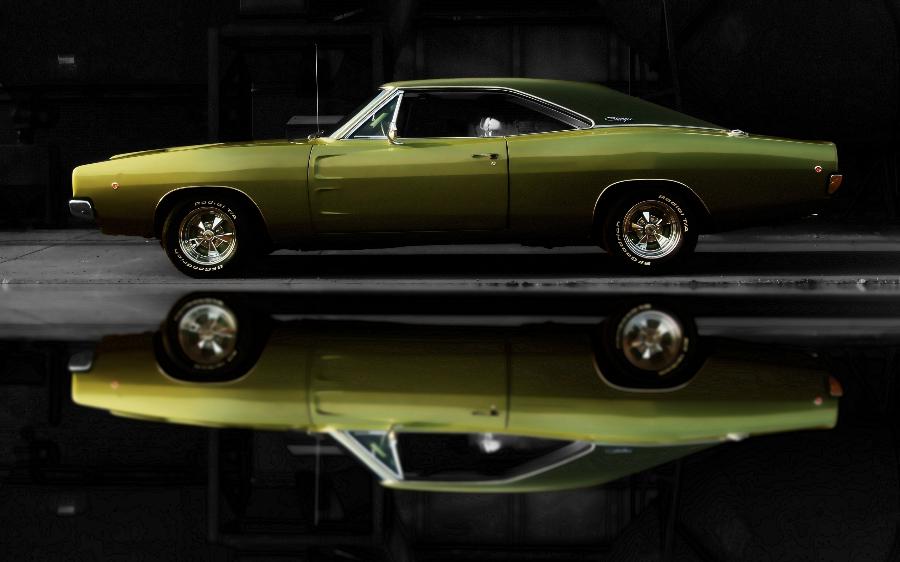
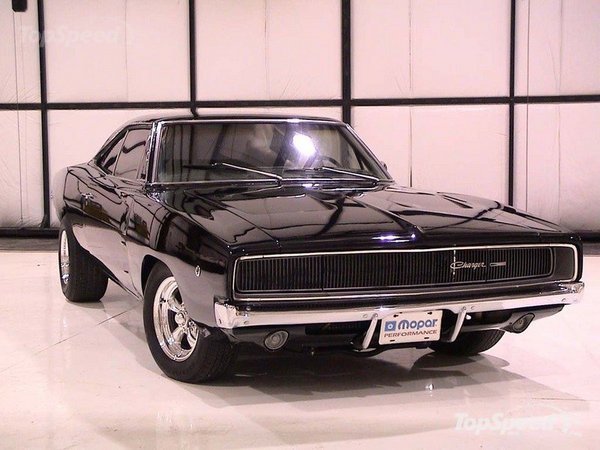

'68 Dodge Charger R/T
This is where my love of the Dodge Charger came to be, in a almost exact copy of the green 1968 Charger pictured above. Only difference was a Hemi engine. A guy named Dave Bremecone bought a brand new one with a 426 Hemi in it and gave a couple of us guys a ride one day. The speedo said 150 mph and we chuckled a little. We thought it was just hype, a marketing tool. Well, we were wrong. That ride we took that day was amazingly fast. Dave smashed the gas on the expressway and lit 'em up. This baby hit 150 mph.
Now I have been faster than 150 mph. I drove a 2001 Silver Anniversary Corvette myself that I pushed to 160 mph but there is a big difference. The Vette felt as smooth and precise as flying in a plane. I was in total control. The Charger felt like a accident waiting to happen.
The 1968 Dodge Charger R/T is one of those muscle cars that have definitely withstood the test of time. How else do you explain the car’s popularity these days, more than 40 years after the car first made waves in the late 60s?
The answer, as Vin Diesel’s character in Fast and the Furious will tell you, is pretty simple: the ’68 Charger R/T was, and still is, a true man’s car. It’s the type of muscle car that imposes an image of fear and star quality wrapped in one awesome package. With an unmistakable design that features the now famous hidden headlight grille, the overall curvy body, the refined tail, and the prevalent use of chrome on the car, the ’68 Charger R/T was in a class of its own back then.
More than the impressive aesthetics and timeless design, the Charger R/T also boasted of a powertrain that featured a 440 cu. in. four-barrel Magnum V8 engine that produced 375 horsepower with an engine option in the form of the 426 Hemi engine that came with 425 horsepower.
While other muscle cars at the time came out either with a more dynamic profile or a more powerful engine, nothing could compete with the Charger R/T when it came to the whole package.
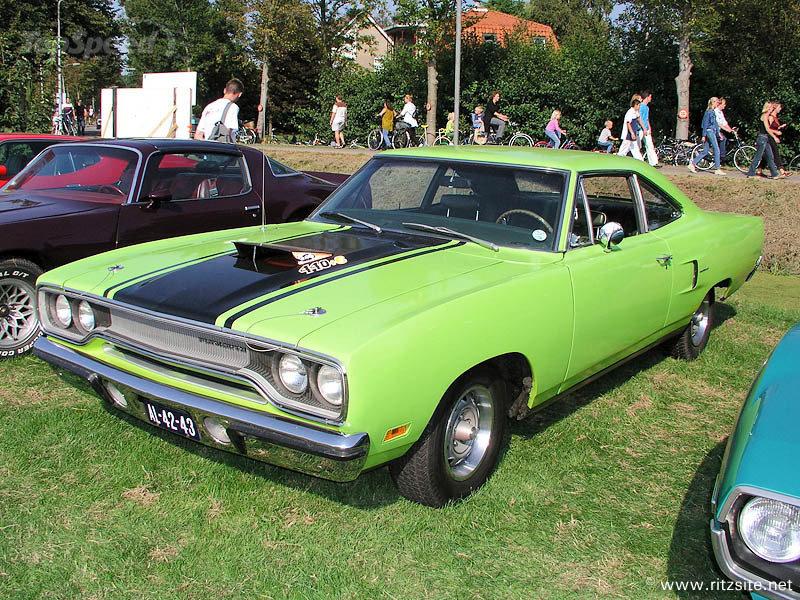
'68 Plymouth Road Runner
It may have had a name that’s inspired from the Looney Tunes character, but make no mistake about it, the Plymouth Road Runner Hemi was all business, all the time. Coming with a standard powertrain that featured a 383-cid, four-barrel V8 engine with 335 horsepower or a more powerful 426-cid Hemi engine with 425 horsepower, the Road Runner Hemi became a popular choice for a muscle car in the late 60s because it offered customers a back-to-basics package that underscored everything people wanted in a muscle car without the frills attached.
In building the Road Runner Hemi, Plymouth pretty much put emphasis on the car’s performance, leaving all the styling intricacies behind. Nothing about the car’s looks screamed incredible because everything that wasn’t essential in improving the car’s performance was left out, including the interior where “added options” became a foreign concept. But despite its pedestrian looks, the Road Runner Hemi’s impressive powertrain certainly made up for all of it.
As a side note, Plymouth actually paid Warner Brothers $50,000 for the rights to use the name and likeness of the Road Runner and another $10,000 to develop the “beep, beep” horn. Just goes to show that despite being a simple-as-can-be muscle car, the Plymouth Road Runner Hemi still offered plenty of character.
The Plymouth RoadRunner was developed as a mid-priced car and was placed between the Satellie and Belvedere model line up. It was built on the B-body platform. The RoadRunner was light and featured few amenities. This not only drove the price of the vehicle into territory that most could afford, but it gave an advantage over heavier vehicles. The front and back seats were both bench. There was no radio, no air conditioning, no cruise control, no trim, and very few color options. Most of the options available favored speed and acceleration.
Based on the heavy luxury cars in the B-body line, the Roadrunner was lighter than the compact-based ’Cuda. To make it both light and cheap, the Roadrunner had few amenities - forget about carpet, for example. Creature comforts gave way to sheer performance and cost considerations. Though the Road Runner was based on the Satellite, in 1970 it had a rallye dash and 150 mph speedometer, cost more than the Satellite, and had a lot less "frills" (depending on the year) in terms of carpet and insulation.
Plymouth payed $50,000 to Warner Brothers to use the name and cartoon likeness of their Road Runner cartoon character (as well as a "beep-beep" horn). It was a solid car and a favorite among moonshiners. It was faster than most police vehicles and due to its sturdy construction, was very reliable.
1968
The standard engine was MOPAR’s tried and true 383 cid powerplant, which was treated to the heads, manifolds, camshafts, valve springs, and crankcase windage tray from the race ready 440 Magnum . The result: 335bhp and 425lb-ft. This was coupled with numerous other performance features including beefed up suspensions, manual transmissions, brakes, tires.
The interior was basic: a no nonsense bench seat and no carpeting - just rubber floor mats. The main attration was a base price of $2896. For those who wanted a little bit extra, there was one engine option; for $714 Plymouth would slide in a 426 Hemi. Although the Hemi clashed with the budget based principle of the Road Runner, 1/4 mile times in the low 13s needed no apologies.
A hardtop coupe and functional hood vents were added mid year during 1968. A horn that went "beep-beep" complimented the road runner decals (in gray due to time constraints) that were standard on all Road Runners. Plymouth originally estimated that it would sell 2,500 vehicles in 1968; it actually sold 45,000 copies. The 1968 Road Runner is perhaps the second most significant muscle car to the 1964 Pontiac GTO as it shifted the market back to its bang for the buck roots.
1969
In 1969, bucket seats became available. The decals were now in color. A convertible option joined the line-up. An inexpensive engine, when compared to the Hemi, became available. This was a three-two barrel carbureted, 440 cubic-inch V8, dubbed the 440 Six Pack. Nearly 90,000 RoadRunners were sold during 1969.
The 383 engine remained the standard powerplant and a 440 CID engine with three two-barrel carburetors, known as the "440 Six Barrel"(6-BBL), was added to the lineup at mid-year to qualify the engine for the "Super Stock" drag racing class. The Six Barrel Road Runners had no wheel covers or hubcaps and a lift-off fiberglass hood. Its 440 engine produced 390 hp and 490 ft·lb of torque @ 3200 rpm, very similar numbers to the Hemi and at a lower engine speed. This meant the cheaper 440 6-BBL was nearly as fast as the 426 Hemi, at least up to highway speeds. This option, along with the economical, yet fast 383 and the outrageously fast Hemi helped propel Plymouth, and corporate sibling Dodge, to the top of the dragstrip echelon.
1970
The 383 engine remained the standard powerplant and a 440 CID engine with three two-barrel carburetors, known as the "440 Six Barrel"(6-BBL), was added to the lineup at mid-year to qualify the engine for the "Super Stock" drag racing class. The Six Barrel Road Runners had no wheel covers or hubcaps and a lift-off fiberglass hood. Its 440 engine produced 390 hp and 490 ft·lb of torque @ 3200 rpm, very similar numbers to the Hemi and at a lower engine speed. This meant the cheaper 440 6-BBL was nearly as fast as the 426 Hemi, at least up to highway speeds. This option, along with the economical, yet fast 383 and the outrageously fast Hemi helped propel Plymouth, and corporate sibling Dodge, to the top of the dragstrip echelon.
Just what you need to psyche out the competition at the stoplight. The "Air Grabber" would automatically close when the engine was turned off, to keep out the elements. The engine choices remained the same, although the Hemi went from solid to hydraulic lifters for improved durability and the standard four speed manual became an option as a strengthened three speed manual was made standard.
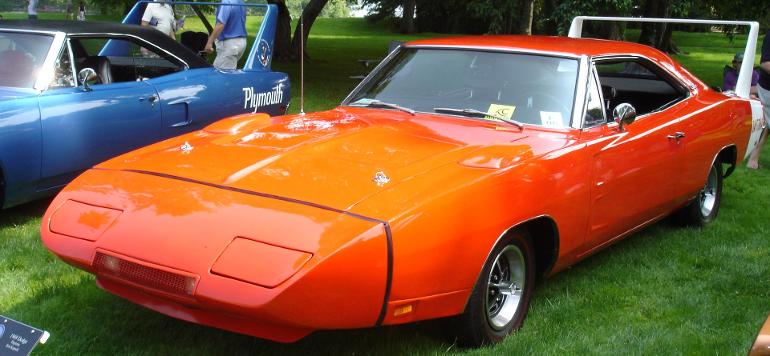
'70 Dodge Daytona Charger and Plymouth Road Runner Superbird
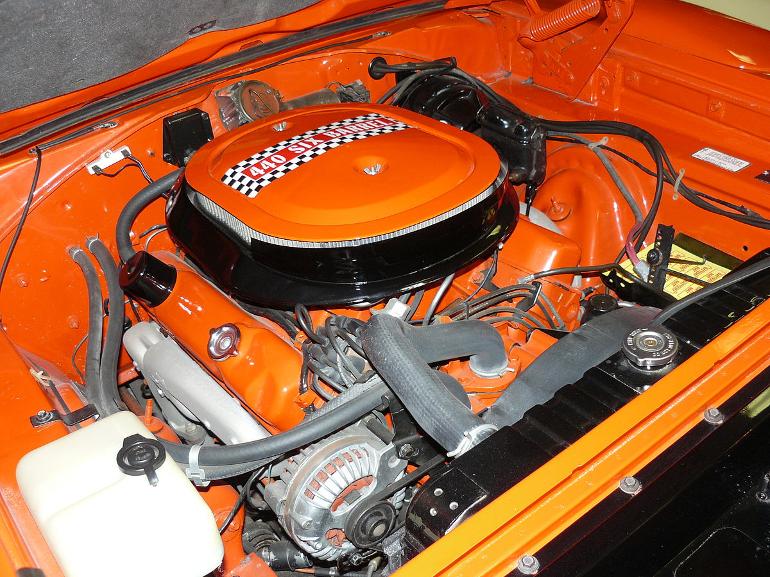
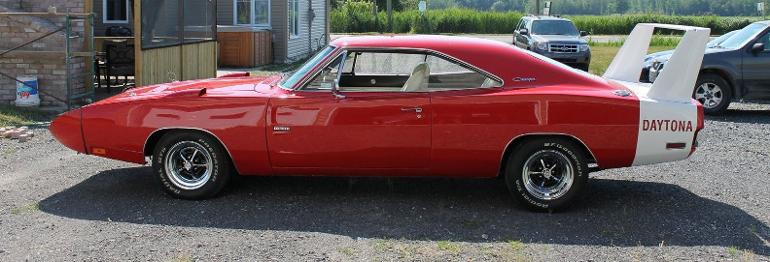
With the failure of the 1969 Dodge Charger 500 on the highbanks of the superspeedways (tracks of a mile, or more in length), the 1969 Dodge Charger Daytona was created. It was intended to be a high-performance, limited-edition version of the Dodge Charger produced in the summer of 1969 for the sole purpose of winning high profile NASCAR races. It won its first race out, the inaugural Talladega 500 in the fall, although it was a rather hollow victory as all of the top names had left the track on Saturday in a boycott of the 1969 Talladega race. Buddy Baker in the #88 Chrysler Engineering Dodge Charger Daytona was the first driver in NASCAR history to break the 200 mph mark on March 24, 1970 at Talladega. The 1969 Dodge Daytona won two races in 1969 and another four in 1970 for a total of 6. Its successor, the 1970 Plymouth Superbird, won 8 races - all in 1970. (In a bit of irony, in 1969 a Daytona won at Talladega, and a Ford Torino Talladega won at Daytona.) These compare with 29 NASCAR victories for the 1969 Ford Torino Talladega, and 8 for the 1969 Mercury Cyclone Spoiler II. The 1969 Dodge Charger 500 managed to win 22 NASCAR races over the 1969 and 1970 seasons; however, all but one of those victories came on the short tracks - several of which were still being run on dirt at the time.
One of the four famous aero-cars, the Dodge Daytona featured special body modifications that included a 23-inch-tall (584 mm) stabilizer wing on the rear deck, a special sheet-metal "nose cone" that replaced the traditional upright front grille, a flush rear backlight (rear window area), a 'window cap' to cover the original Charger's recessed rear window, specific front fenders and hood that were modeled after the upcoming 1970 Charger, stainless steel A-pillar covers and fender mounted tire clearance/brake cooling scoops. The Daytona was built on the 1969 Charger's R/T trim specifications, meaning that it carried a heavy-duty suspension and brake setup and was equipped with a 440 CID Magnum engine as standard. Of special note to collectors is the optional 426 CID Hemi V8 engine, which only 70 of the 503 Daytonas carried. It had a corporate cousin in the "one year-only" 1970 Plymouth Superbird.
'71 Plymouth Hemi Cuda
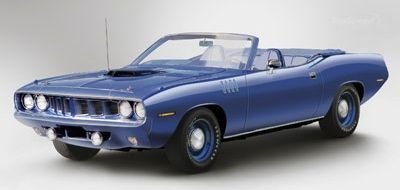
One of the rarest and most important muscle cars of the 70s is the 1971 Plymouth Hemi’Cuda Convertible, a car that, to this day, remains as one of the most sought-after muscle cars in history. The Hemi’Cuda, a direct descendant of the Plymouth Barracuda, became a rare gem, not only because it came with a 425 cu. in. V8 engine that produced 425 horsepower, but because it served as Plymouth’s answer to the established names of that time, particularly the Camaro and the Mustang.
But of all the Barracudas that ever came out, the 1971 Hemi’Cuda Convertible remains the crown jewel of them all. Limited to only 11 units, the Hemi’Cuda Convertible is about as rare as any muscle car you’ll ever find. It certainly helped its cause for being an aesthetically attractive car, one that came with a combination of imposing good looks and top-of-the-line performance credentials.
Just to give a perspective as to how rare and sought-after this muscle car is these days, one model was auctioned off at Barrett Jackson for a whopping $4 million.
1968 Dodge Coronet R/T
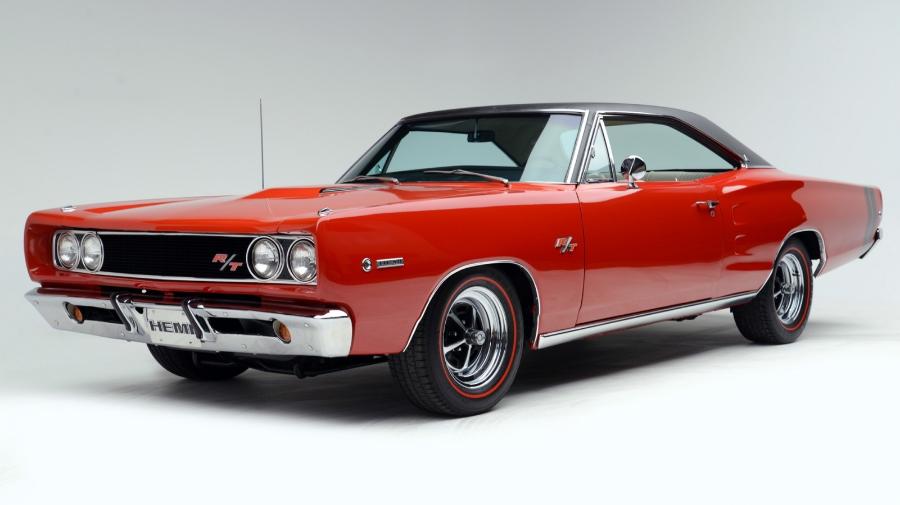
Mention the terms "big-block" and "B-body" while referencing Mopars, and chances are there will be an automatic response: Someone will shout out "Charger R/T," or "Road Runner," or perhaps even "Super Bee." But before any of those models became reality, there was the Coronet R/T. Introduced in 1967, the R/T version of the Coronet was loaded with nothing less than a 440 Magnum engine--the Hemi was the only other option--and fitted with a heavy-duty suspension to keep it connected to the road.
Although the Coronet R/T continued into 1970, we've opted to focus this month on the two model years that were most similar in appearance and equipment, the '68 and '69 models.
ENGINES
Dodge continued to outfit the Coronet R/T with the 440 Magnum V-8 as standard equipment from the time of its introduction. A Chrysler RB-series engine, the 440-cu.in. big-block was produced with 4.32-inch cylinder bores and used five main bearing caps to keep the 3.75-inch stroke, forged-steel crankshaft in place. Engineers also provided a long-duration, hydraulic-lifter camshaft, as well as a cast-iron intake manifold with provisions for an 800-CFM Carter four-barrel carburetor and cylinder heads that contained 2.08/1.75-inch intake/exhaust valves. With 10.1:1 compression, exhaling through low-restriction exhaust manifolds and dual exhaust, the 440 Magnum carried a factory rating of 375hp at 4,600 RPM and 480-lbs.ft. of torque at 3,200 RPM, which continued unaltered through 1969.
A costly alternative ($605 in 1968 and $718 in '69) was the legendary 426-cu.in. Street Hemi. This beefy cast-iron block contained forged aluminum pistons in 4.25-inch bores and a forged steel crankshaft and connecting rods. New for 1968 was a solid-lifter camshaft that featured 284-degree intake/exhaust duration with 0.484/0.475-inch intake/exhaust lift. Dual 625-CFM Carter four-barrel carburetors were bolted to an aluminum intake manifold, while other performance additions included a 3/8-inch fuel line, "maximum performance fuel pump" and a dual-breaker distributor. The cast-iron heads touted 2.25/1.90-inch intake and exhaust valves and, naturally, the Hemi was fitted with low-restriction dual exhaust.
All told, the engine touted a factory rating of 425hp at 5,000 RPM and 490-lbs.ft. of torque at 4,000 RPM (the figures remained the same for 1969 models), but it's widely accepted that these figures are a bit conservative. It's also known that Hemi Coronet R/T production is staggeringly low when compared to the 440; one published report indicates just 97 hardtops and 10 convertibles were built in 1969.
There are a few indicators of which engine should be in place in a Coronet R/T, the first being the fifth digit of the VIN: An L indicates the 440, while a J indicates the Hemi. Additionally, the vehicle's body tag--commonly called the fender tag, located on top of the left inner fender under the hood--will have the E86 code on the first line if the 440 was installed; the Hemi is indicated by code E74. One other method is to consult with an expert within the car clubs we've listed here.
Both engines offered in the Coronet were built to withstand the rigors of competition use. Either engine can be rebuilt today, and there are a number of specialists with the experience to properly deal with any and all nuances of these particular powerplants. Parts availability is quite good and continues to improve, and the aftermarket can help you make lots more power, if that's the route you'd like to take.
When dealing with one of these cars today, the biggest issue is determining whether or not the example in question has the original engine and other associated bits, as the car's value will vary significantly based on this. If you can't find an all-original example, your next best alternative, in terms of collector value, is to find one with date-code correct components. Numerous books are available to provide details here, and consulting with a recognized expert may also be advisable if you're considering the purchase of a particularly rare or valuable example.
TRANSMISSIONS
During this two-year span, just two transmissions were offered on the Coronet R/T. The standard gearbox was the three-speed TorqueFlite 727 automatic; its shift lever was located on the column or through the optional center console. Period literature indicates that, depending upon the engine, two different TorqueFlites were installed: four clutches while backing the 440, five against the Hemi. Visually, there's no difference to the transmission case, other than the part number stamped into the pan rail. The automatic's ratios were 2.45, 1.45 and 1.00:1, followed by 2.20:1 for reverse.
A "no charge" option was the A-833 four-speed manual that could have been bolted up against either engine. The floor- or console-mounted shifter for 1968 initially came from Inland and used a reverse lockout feature, while late 1968 and '69 models featured Hurst shifters. Ratios for the four-speed were 2.65:1, 1.93, 1.39 and 1.00:1, with a 2.57:1 reverse. Ordering the four-speed also mandated the installation of the Sure Grip differential and heavy-duty axles.
Essentially bulletproof, both transmissions have a proven track record of durability, no matter your driving style. However, after all these years, miles and perhaps, powershifts, the possibility of internal issues is significant, whether due to abuse or lack of maintenance. Rebuild kits for both units are plentiful and affordably priced, and the job can be done by the technically savvy home mechanic or by a professional.
DIFFERENTIAL
As was often the case with muscle cars, engine and transmission combinations carried certain rear axle mandates. To be more specific, 440/TorqueFlite-powered models included Chrysler's 8¾-inch axle assembly with a 2.94 or optional 3.23:1 final drive ratio, even if the Sure Grip option was selected. Hemi-equipped versions of the R/T--with or without Sure Grip--used the same differential, but with the 3.23:1 gear. As for the four-speed, it mandated the installation of the larger 9¾-inch Sure Grip, also known as the Dana 60, which was accompanied by a 3.54:1 ratio. These combinations held true both years.The '69 Super Track Pak option provided a 4.10:1 ratio.
Sturdy enough to sustain repeated drag-style launches, both the 8¾- and 9¾-inch units were commonly used throughout Chrysler Corporation for a number of years (the Dana 60 saw numerous other applications as well). This means that service parts are readily available; it has also led several aftermarket companies to offer a wide variety of gear ratios, some replicating the original equipment and others providing options that the factory never offered.
CHASSIS
Like its siblings in the Coronet family, the R/T started with a 117-inch wheelbase unit-body platform with a front subframe--but the similarities stop there. Thanks to the increased power under the hood, the independent front torsion-bar suspension and rear leaf-spring arrangement were automatically upgraded to the heavy-duty Torsion-Aire package. This meant the front torsion bar diameter measured 0.92-inch (instead of 0.88-inch), while the front anti-roll bar measured a stout 0.94-inch.
In addition to the modifications up front, the standard 58-inch long, 4½-leaf rear springs were swapped out for six leafs on the left side and 5½ on the right. Finally, the assembly line bolted in 1-inch heavy-duty hydraulic shock absorbers at all four corners. The only alteration of this arrangement during our highlighted models years came in 1969, when 0.98-inch-diameter torsion bars were utilized in the front suspension; rear leaf springs were also extended to 62 inches in length that year.
As we've discussed in previous Mopar B-body Buyer's Guides, the popularity of this late-Sixties body type means that a steadily increasing number of OE-style replacement parts are becoming available from a number of suppliers. For those who appreciate modern handling characteristics from their steed, aftermarket companies have been offering performance suspension upgrades, including Hotchkis Sport Suspension, Firm Feel Inc. and Magnum Force Racing; tubular control arms, for example, are prominent in their catalogs.
BRAKES
Knowing full well that the Coronet R/T wielded some serious power, Dodge's engineers opted to give the hydraulic drum brake system an upgrade: front drums measured 11 x 3 inches, while the rear pair measured 11 x 2.50. Although they provided more stopping surface area, both front and rear shoes had to be adjusted manually, unlike the self-adjusting 10-inch drums used on more pedestrian B-body models.
Dodge offered two options: power-assisted drums and front disc brakes (which required power assist). Highly desirable among collectors today, the 11.04-inch vented front rotors were paired with four-piston calipers, though the rear drums paired with the discs were the smaller 10 x 2.50-inch units.
Finding OE-style replacement parts today is a relatively easy task, with a few exceptions: the front drums and the un-finned rear drums, the latter of which are no longer produced. We were able to locate front drums through Layson's Restorations (www.laysons.com) and Year One. As for the rear drums, 1970-up finned drums are functionally interchangeable and are more readily available. Front disc-brake components can also be difficult to source, though the aftermarket has brought some of the key components--like rotors--back to parts shelves.
If your car is more of a driver, you may consider a disc brake swap, using more readily available parts. Several aftermarket companies offer a variety of front kits--which differ from the stock setup--as well as rear disc conversions; remember to check wheel clearance requirements.
WHEELS & TIRES
In a sense, the wheels on an R/T were also upgraded to heavy-duty status. Standard issue with 440-powered examples were stamped-steel units that measured 14 x 5.50 inches, which were wrapped in F70-14 whitewall or red stripe tires; the wheels were then decorated with a standard "dog dish" hubcap or one of three optional full covers. Buyers could have also opted for the 14 x 5.50-inch chromed five-spoke (Magnum 500) wheels. Hemi-powered cars received 15 x 6-inch stamped steel wheels shod with F70-15 red line tires; also included was a standard hubcap or optional full wheel cover.
For 1969, full covers were scrapped for Hemi-powered models, and a short-lived option was W23, 15 x 6-inch aluminum cast center Road Wheels by Kelsey-Hayes, often called "recall wheels" because Chrysler called them back due to concerns over lug-nut loosening. Originals are now a high-demand item, though reproductions have become available, and in alternate sizes, to boot. The Magnum 500-style Road Wheel also changed, now having chrome only on the spokes and using a trim ring.
While redline bias-plies are being reproduced, a number of collectors have opted to install equivalent radials, as they provide a better driving experience.
BODY & INTERIOR
The Coronet R/T was available as a two-door hardtop (WS23 in the VIN and fender tag) or convertible (WS27) and was equipped with an array of R/T badges, as well as a "power bulge" hood--a faux scoop--that differed slightly in 1969. For the '69 models, option code N96 (Ramcharger fresh air induction system: twin forward-facing fiberglass hood scoops) was an option on 440-powered cars and came standard when the 426 Hemi was selected.
The grille, blacked out, was shared with the Coronet 500, although this and the rear taillamp panel were revamped for '69. During both years, twin simulated recessed scoops were part of the quarter panel design that, in '69, could have been dressed with add-on scoops; plus, the rear Bumble Bee stripes could have been deleted. Convertible and Hemi cars received extra body bracing. An easy way to differentiate between model years is by looking at the side markers: They were round in 1968, rectangular in '69.
Inside, foam-padded all-vinyl bucket seats came standard, as did a horizontal 150 MPH speedometer. Upgrades included the racy Rallye Instrument Panel Cluster and aforementioned console, as well as choice of radio, tinted glass and adjustable headrests (before they became mandatory items).
RESTORATION & PERFORMANCE PARTS
Despite Chrysler Corporation's effort to ward off corrosion when these cars were new, rust is still their biggest enemy. A plus side to the exploding popularity of late Sixties muscle cars is that plenty of parts--floorpans, trunk floors, quarter panels, rocker panels, even rear frame rails and lower fender patch panels--are available for this generation Coronet R/T, though full steel fenders are not. Aside from the aforementioned mechanical parts, interiors can be restored just as easily, since seat covers, door panels, floor carpet and other associated components can be obtained.
As for performance parts, we've already discussed suspension and brake upgrades, but there are also carburetor, intake, exhaust and cooling system parts that can help boost your power ratings.
Engine
Intended as a performance car from its inception, two big-blocks were available under the hood of the 1968-'69 Coronet R/T: the base 440 Magnum that made 375hp and the dual-quad-topped 426-cu.in. Street Hemi capable of 425hp (or so).
Brakes
Oversize drums were standard--power assist was optional--although most collectors prefer an example with the optional power front disc setup. Many OE-style parts are available, and the aftermarket offers modern upgrade kits for both ends of the car.
Transmission
The three-speed TorqueFlite automatic was a popular standard feature, whereas the optional four-speed manual mandated rear gear selection and prevented accessories such as air conditioning and automatic speed control from being installed.
Interior
Buying a Coronet R/T meant that vinyl bucket seats were provided, in a choice of six colors: blue, green, red, black, white or gold, the latter of which was replaced by tan in '69. Upgrades included the Rallye Instrument Panel and choice of radio.
Chassis
The 1969 model year welcomed three performance options to the intermediate unit-body Mopar: Super Performance Axle Package, Track Pack and Super Track Pack, which would have added anywhere from $143 to $272 to the base sticker price.
Body
Completely revamped for '68, this B-body's overall length measured 206.6 inches; it changed little the following year with the exception of the grille, taillamp panels and hood. Fenders and quarters vary little between years--the main change was the side marker design.
Owner's View
When I found the car for sale in 1999, it had been stored uncovered in a garage for a few years, so the cats had left a lot of fine scratches in the paint, while some rodents left nut shells all over the intake. I decided to pull the engine right away and rebuilt it with aluminum heads, aluminum Edelbrock intake and a 735-CFM Edelbrock carburetor, which really woke up the 440; I also upgraded some of the suspension and wet-sanded/buffed the paint. Finding parts is a lot easier than it was less than a decade ago, thanks to a lot of the aftermarket's efforts.
The Coronet R/T is a great car to drive--not a road racer by any means, and with the 3.55:1 rear gear it isn't a rocket out of the hole, but it's a great cruiser that can still make you sink in the seats a bit.
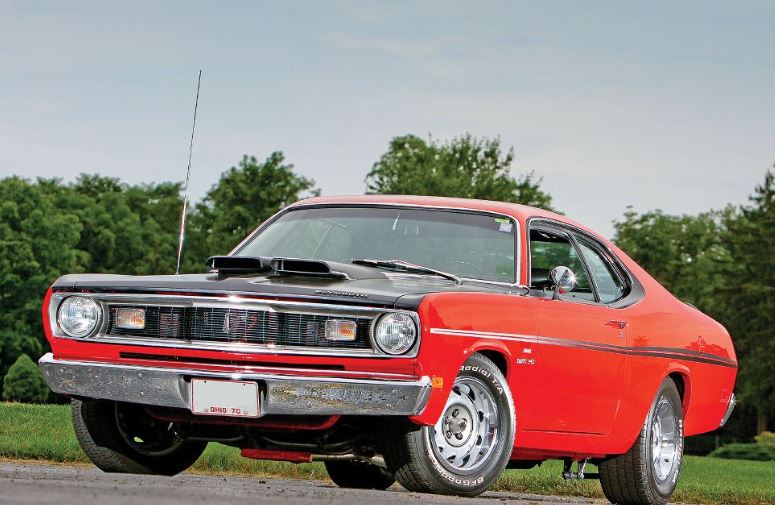
1970 Plymouth Duster
In 1970, Plymouth introduced a new car to the market with roots similar to the Road Runner – high performance at a low price. This sporty new model was based on the 108 inch wheel base Valiant but featured a sloping fastback appearance. Considered an A-body mopar is was a light weight car. Not surprisingly, when mated with the powerful 340cid small block, the Duster could even surprise a big block. The Duster was the least expensive car part of the Rapid Transit System in 1970.
Under the hood the Duster 340 featured the same 275hp engine used in other Mopars. The base transmission was a 3 speed. However, the A833 4 speed and the TorqueFlight automatic were both available. The suspension was upgraded to handle the power and included heavy duty torsion bars, sway bars, brakes, and included your choice of 3.55 or 3.91 sure grip gears. With a little tuning and sticky tires Duster 340’s were known to run high 13 second quarter mile times.
In terms of appearance the Duster 340 included a small Duster 340 badges on the fenders and tail panel. The standard issue wheel was the Rallye rims, although you could option for wire wheels.
